
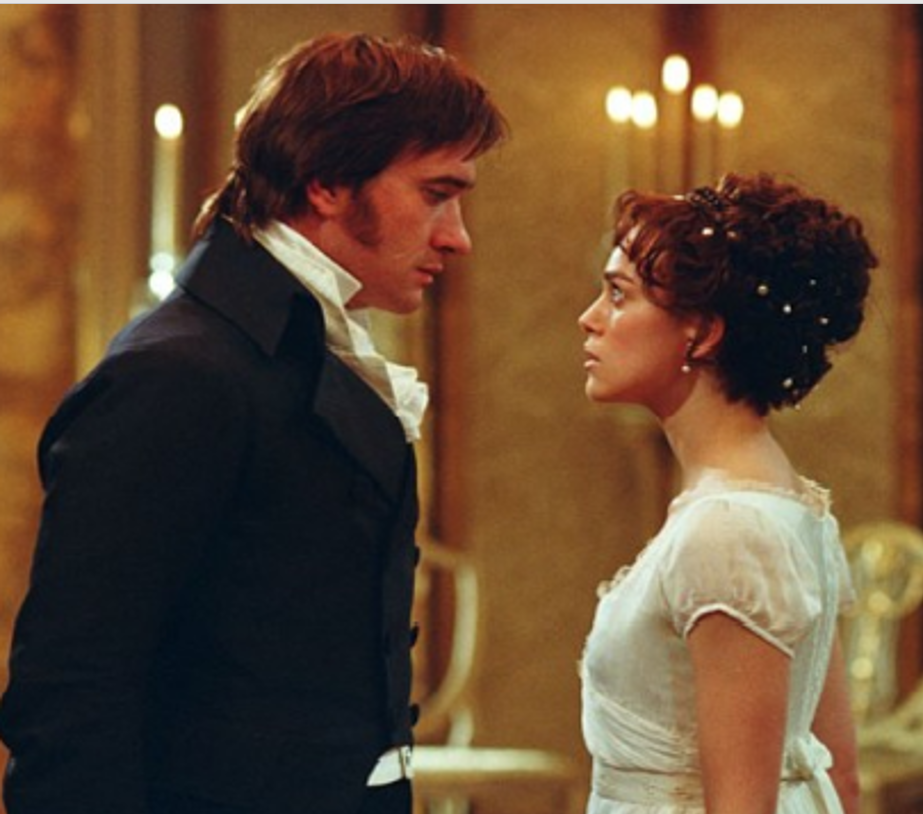
Some “In-between” Inklings as I Re-read Pride and Prejudice
Various opinions I recall from past readings:
Penguin Classics edition editor Tony Tanner, “This is a novel about how a man changes his manners and a woman changes her mind.” (What a great line. I wish I’d said that.)
And from a (male) professor when I was in grad school: “I like Jane Austen because she writes like a man.” (Cough. In fact, she writes like a woman.)
A grad-school classmate: “Mr. Bennet is the father I wish I’d had.”
A student of mine when I taught a 19th C Lit class: “Mr. Bennet is a terrible father, isn’t he? And a worse husband.”
In-between Centuries, Betwixt Social Classes
I’m re-reading P&P while plotting a Regency novel, so I’m gleaning for clues about the time period.
What strikes me is that this is an “in-between” interval in history—I think in its first draft, it is set in 1794 or so, during the sporadic war between Revolutionary France and the rest of Europe. The Royal Army wasn’t that involved, but the Royal Navy was, and Austen would have known all about that, as she had two brothers in the Navy.
The published version (rewritten probably in 1810 or so) seems to take place in 1802 (I’m guessing from the troop movements and the fashion), which is during the Peace of Amiens, a brief time of peace in the “Napoleonic Wars”. This pause meant that Lieutenant Wickham and the rest of the “Shire” (the county regiment) could be stationed in the middle of England for most of a year. So the nation was “in between” two long periods of war.
There’s a lot more “in-between” in other aspects of the plot. The society at that moment is also “in between,” literally between two centuries, but also in between an agrarian economy and what is coming—the industrial revolution. It’s also between feudalism and capitalism, which is already creating an upheaval in the British class system.
While some characters are clearly planted in one class (Darcy is a landed aristocrat) or another (his housekeeper Mrs. Reynolds is clearly working class), many others inhabit a more ambiguous position in this class-obsessed society. Here’s my own snooty social analysis of the cast of characters, based on my reading and the invaluable Jane Austen Wikia. Additions and corrections are welcomed!

Cast of Characters
- Fitzwilliam Darcy is a rich aristocrat (“Ten thousand a year and a house in Town”), the grandson and nephew of earls, but doesn’t have a title. He is just “Mr. Darcy,” but as noble as they come.
- Mr. Bennet is “a gentleman,” with an inherited estate and presumably a university education, but he has no money, and his family will be losing the estate when he dies.
- Mrs. Bennet was the daughter of an attorney, and rather “common,” but in her youth she was pretty enough to attract the gentleman Mr. Bennet (who then spent their marriage loudly lamenting his folly). She did bring with her a dowry of 4000 pounds, but she and her intemperate husband wasted most of it away.
- Mr. Gardiner (Mrs. Bennet’s brother) is a merchant, so of the middle-class, but he is wealthy enough to treat his wife and nieces to long holidays. He also feels confident enough to ally with the nobleman Darcy to save Lydia from misfortune, or at least, to force Wickham to marry her. (In fact, his calm common sense and good manners lead the “proud” Darcy to overcome his “prejudice” against Mrs. Bennet’s “vulgar family.”)
- As the daughters of a gentleman, Jane and Elizabeth are considered gentry in their little town. But they are poor. However, they are pretty enough and cultivated enough to assume they can marry as they wish—into the nobility even. (And they do.)
- Their younger sisters are, however, extraneous, just as well-born as Jane and Elizabeth, but there aren’t likely to be any more indulgent rich men willing to marry into the chaotic Bennet clan. Fortunately, their elder sisters (or rather those sisters’ husbands) end up rich enough to support them.
- Lady Catherine de Bourgh is the daughter of an earl and sister of Darcy’s mother. She married a “sir”—someone who had been granted a knighthood, but it was not an inheritable title. (I’m basing that on Lady C’s declaration that her daughter, not a male cousin, would inherit the estate.)
- Colonel Fitzwilliam is Darcy’s first cousin, and the son of the current earl. His elder brother is the heir, and Colonel F, like so many second sons, joined the Royal Army. He is very attracted to Lizzie, but warns her that he must marry wealth as he does not expect to inherit enough to maintain his lifestyle. (This suggests to me, btw, that Darcy’s father must have been very wealthy, bring the Pemberly estate and “ten thousand a year” to the marriage with the earl’s daughter Lady Anne, who would not have gotten much more than a dowry.)
- Rev. Collins will inherit the Bennet estate, and thus become landed gentry, but now he is basically the obsequious servant of Lady Catherine.
- Mr. Bingley is and his sisters are rich but not noble. (He has to lease Netherfield, so he hasn’t an ancestral estate to inherit.) But he’s comfortable associating with the truly aristocratic Darcy, and is widely known to be very rich. This means, of course, that his sisters are the snobbiest snobs that ever snobbed.
- Charlotte Lucas is of “good” birth, but not pretty enough or wealthy enough to marry a man of the upper class.
- Sir William Lucas, Charlotte’s father, was knighted because he had been prominent in county governance. He is one of the more “in-between” characters because he is “of trade”, only moderately wealthy, and yet is a “Sir”.
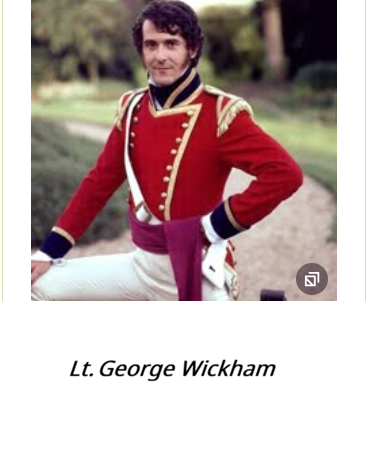
- Wickham is the son of an attorney who ran Darcy’s father’s estate, and Darcy Sr.’s godson. From this middle-class background, young Wickham was reared and educated as a gentleman, and is an officer in the Royal Army, but feels no allegiance to any supposed code of honor. He is the character most affected, I think, by the uncertainty of his social status, full of resentment and expectations.
- It is certainly a sign of the new social disorder that most of these people are invited to mingle at that ball at Bingley’s Netherfield manor house which brings Darcy and Elizabeth together.
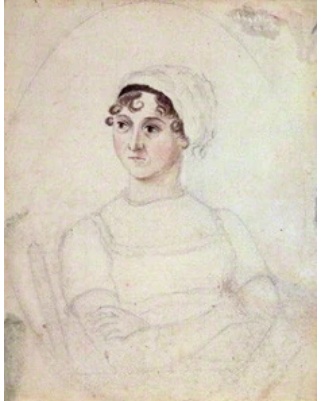
Austen—herself caught in the most ambiguous of class situations—was the perfect author to capture the uncertainty and also the opportunity brought by the crumbling of traditional roles in the turn of that century.
A few questions I am considering as I read:
- What do you think the society in this story values? What about the author?
- As in Sense and Sensibility, Austen here explores the deep inequity that befell many women of her class—like she and her sister, Lizzie and Jane will be destitute unless they marry well. (They did. She didn’t… though that might have been by choice.) Do you think she kind of wimped out by having both the Bennet sisters marry for love men who “just happened” to also be rich?
- There are a lot of “foils” in this novel (two characters who have much in common but come to different endings because of difference in character)– Darcy and Wickham, Lydia Bennet and Darcy’s sister, Lizzie and Charlotte Lucas (Mrs. Collins), Rev. Collins and Mr. Bennet. Any others come to mind? What difference does each pair have?
- Were there any characters you were surprised to find yourself liking? How about disliking?
- Who were you surprised to find speaks the truth?
- This is a “social comedy” or a “comedy of manners.” Did you laugh at all? When? At whom?
4 thoughts on “Some “In-between” Inklings as I Re-read Pride and Prejudice”
I am currently watching a short docu series on Brit Box about Jane Austen and how she writes about her own life and situation. It is better than most such productions. The commentary by authors, historians, and actors is enlightening.
I was really struck by the parallels between her own situation after her father died, and that of the sisters in Sense and Sensibility.
The last episode if the documentary spent a lot of time discussing how much of Austen’s work is commentary on politics of her day. I’d never considered “Emma” political satire. “Mansfield Park” is apparently a diatribe against slavery, though many “experts” today refuse to consider that. “Pride and Prejudice” is definitely feminist and very much against male ruled inheritance, something that has dominated English Law forever. Only in my lifetime has Parliament given females equal opportunity in the line of succession in the royal family and other landed estates.
I think there was a major change in 1848 with marital law that did a bit to protect women. But of course, until they got the vote, there was never any real justice.
In Scotland, I remember, estates could pass to a daughter, but only if there were no sons.