
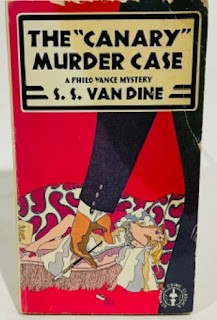
Part 2 (Part 1 here)
- A servant must not be chosen by the author as the culprit. (WHAT ABOUT “THE BUTLER DID IT”? I THINK IT MIGHT BE FUN TO HAVE A SERVANT WITH A REALLY GOOD SECRET MOTIVE DO IT… LIKE THE ASSISTANT MANAGER OF THE GOLF CLUB WHOSE WIFE WAS STOLEN BY THE MILLIONAIRE MEMBER.)
- There must be but one culprit, no matter how many murders are committed.
- Secret societies, camorras, mafias, et al., have no place in a detective story. (SHERLOCK HOLMES HAD SEVERAL MYSTERIES INVOLVING SECRET SOCIETIES. Just sayin’.)
- The method of murder, and the means of detecting it, must be rational and scientific.
- The truth of the problem must at all times be apparent — provided the reader is shrewd enough to see it. (WELL, IF IT’S APPARENT TOO EARLY, THAT SPOILS THE FUN. BUT IT IS GOOD TO HAVE EVEN THE BEGINNING CHAPTER SOWING THE SEEDS OF THE RESOLUTION.)
- A detective novel should contain no long descriptive passages, no literary dallying with side-issues, no subtly worked-out character analyses, no “atmospheric” preoccupations. such matters have no vital place in a record of crime and deduction. (VERY 1920S OF YOU, SIR. I GUESS FREUD’S WRITINGS HAVEN’T REACHED YOU YET?) (NOW MANY OF THOSE RULES I CRITICIZE COME BECAUSE HE HAS DEFINED A VERY NARROW GENRE—DETECTIVE STORIES—AND MADE IT EVEN MORE NARROW – HARD-BITTEN DETECTIVE STORIES? THE MYSTERY GENRE, AND THE CRIME GENRE, HAVE DETECTIVES (MISS MARPLE) BUT AREN’T ALL “DETECTIVE STORIES” IN THE VAN-DINE DEFINITION. BUT EVEN THE PERHAPS GREATEST DETECTIVE NOVEL WRITER OF THE GOLDEN ERA IN AMERICA—RAY CHANDLER—HAD SOME AMAZING ATMOSPHERIC PASSAGES. I’LL POST A FEW LATER.)
- A professional criminal must never be shouldered with the guilt of a crime in a detective story. (I KIND OF AGREE, EXCEPT I COULD SEE IF THE PROFESSIONAL SAFE-CRACKER DECIDES TO COMMIT A MURDER THAT HAS NOTHING TO DO WITH A SAFE… THAT COULD BE FUN.)
- A crime in a detective story must never turn out to be an accident or a suicide.
- The motives for all crimes in detective stories should be personal. (PERSONAL IN SOME WAY AT LEAST, LIKE “PERSONALLY, I REALLY HATE THAT MY RICH UNCLE IS GOING TO DISINHERIT ME.”)
- A few of the devices which no self-respecting detective story writer will now avail himself of… (AFTER THIS ARE SEVERAL ARCANE “DEVICES” THAT WE CAN TELL WERE PROBABLY USED IN STORIES WRITTEN BY HIS RIVALS!)
I love lists of rules, because you know, rules were made to be broken. He establishes the conventions so that the rest of us can have fun violating them! Here is the entire list with Van Dine’s elaborations and justifications. You can just about hear the “snobby sniff” in his sentences!
http://www.openculture.com/2016/02/20-rules-for-writing-detective-stories.html
–
If you’re interested in “golden-age” detective stories, listen to the Great Detectives of Old Radio podcast, which has restored the old radio dramas of SS. Van Dine and the “rule-breaking” writers of his generation.
4 thoughts on “Part Two: The Rules of Detective Novels”
Now I have an itch to write a book with 5 murders, AND 5 murderers, all unconnected except for location of said murders.
Will they all take place in the same location, or are the locations just similar?
Oh, I think we have to have a body dump that they all use because it was a body dump 10-50 years ago. Copy cats with only one logical thought among them.
Sometimes I worry about the FBI getting hold of our searches and discussions. “Really, Special Agent, I’m writing a murder mystery! That’s why I googled ‘undetectable poisons!'”