

Flying in My Taxi
In the previous posts, we’ve seen how different ways a 3- or 4-minute song can tell an entire story from beginning to end. Let’s see how that works in our next story song, Harry Chapin’s “Taxi”. Now that’s a longer song, more than 6 minutes, which is probably about as long as this short taxi trip would take on that rainy San Francisco night.
This is a great example of the use of story elements in a song:
- Specific setting
- Identifiable characters
- Conflict
- Action and change
- Story structure
- Theme and Motif
I’ll deal with the first few in this post, and the structural and connection elements in the next post.
Setting
A clear setting (time/place) establishes the concrete nature of the song—it isn’t just a lyric poem exploring an idea or emotion, but an experience that takes place at a particular time and place. So the two shipwreck songs establish the setting in the first verse—a ship, a month, a body of water. “Ode to Billie Joe” tells the setting in the very first line: Was the third of June, another sleepy, dusty Delta day.
Harry Chapin’s “Taxi” uses the title to identify the physical setting—a cab—and the first lines to describe the time/place:

It was raining hard in ‘Frisco
I needed one more fare to make my night
 The specifics of the setting include an actual address: “16 Parkside Lane,” where Sue lives in her “handsome home”. Chapin uses the physical details and the atmospheric description of hard rain and empty streets to initiate the events—
A lady up ahead waved to flag me down.
She got in at the light.
The recognition moment also comes from a “taxi” detail—
It took a while, but she looked in the mirror,
And she glanced at the license for my name.
The shared memory also involves a car, which links the present to the past— We learned about love in the back of my Dodge.
There’s a moment in the end where the two contrasting settings come together—
There was not much more for us to talk about.
Whatever we had once was gone.
So I turned my cab into the driveway,
Past the gate and the fine trimmed lawns.
And that brings the momentary reunion to a close, as he drives away. The taxi setting becomes a journey from one not just across town but across the “too many miles and too few smiles” since their last encounter.
Characters
In most story songs, the singer is one of the characters (the sea captain in Another New World, the girlfriend in “Billie Joe”. In “The Wreck of the Edmund Fitzgerald,” the singer is just the narrator).
This is doubly relevant in “Taxi,” as Harry takes the part of the taxi driver… also named Harry. In fact, the songwriter Harry, like the character Harry, aspired to fly, attending the Air Force Academy before he dropped out. Then he, like the character, drove a taxi. “Sue” is based on his college sweetheart, but the encounter in the cab was just a dream the songwriter had. He claimed later that the song was “60% true.”
The gesture Sue makes at the journey’s end emphasizes the difference between their current states:
And she handed me 20 dollars for a 2.50 fare.
She said, “Harry, keep the change.”
His response is brutal, and shows his self-contempt:
Well, another man might have been angry,
And another man might have been hurt.
But another man never would have let her go.
I stashed the bill in my shirt.
I’m struck by how he uses “action”, even minor actions, to manifest the characters and transition into some deeper knowledge, as here, when she leaves him:
And she walked away in silence.
It’s strange how you never know.
But we’d both gotten what we’d asked for
Such a long, long time ago.
The descriptions of the characters stress their contrasts, the contrast in their early ambitions, and their current fates, but also how they are similar.
You see she was gonna be an actress,
And I was gonna learn to fly.
She took off to find the footlights,
And I took off for the sky.
And here, she’s acting happy,
Inside her handsome home.
And me, I’m flying in my taxi,
Taking tips and getting stoned.
Conflict
Conflict is an instigator for change, and it’s an essential element to turn a combination of place, time, and people into a story. There are three main types of conflict—external, internal, and interactional. There’s not much external conflict here, though Chapin does add a bit of tension with the rain and long night’s work. Yes, it’s just a bit, but notice how he shows these two factors bring the characters together. He needs one more fare, she needs to get out of the rain.
Internal Conflict
More central is the internal conflict of what I’d call “dashed expectations”. Both of them are disappointed in the expectations they had in youth—the ambitions that apparently broke them up:
You see she was gonna be an actress,
And I was gonna learn to fly.
She took off to find the footlights,
And I took off for the sky.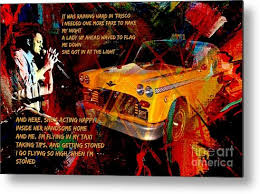
What’s interesting is that his disappointment comes from his failure—he never reached the sky. But hers comes from her success. Despite her fame, wealth, and “handsome home,” she is unhappy. No amount of worldly achievement overcomes her fear of “falling,” or fills that existential void of mortality.
Baby’s so high that she’s skying
Yes, she’s flying, afraid to fall.
I’ll tell you why baby’s crying–
‘Cause she’s dying, aren’t we all?
Interactional Conflict
Understandably, when these two discontented people have their short encounter, the result is interactional conflict. From the start, they are disconnecting. He tries to schmooze a bit, because, of course, he needs a tip.
“Oh, where you going to, my lady blue?
It’s a shame you ruined your gown in the rain.”
She brushes off his conversational foray, and then his suggestion that they’ve met before. Again, that’s understandable. She’s an attractive actress, and probably has to politely discourage men all the time. But she must have a glimmer of memory, because she “glances at the license for my name”, and they have the barest of conversations. But this sets off for them both a cascade of memory of their past relationship. But that past is all they have—this isn’t a mushy romantic reunion story! Their love wasn’t strong enough to overcome their ambitions in the past, and it’s not enough to inspire them in the present:
There was not much more for us to talk about.
Whatever we had once was gone.
This is a taxi ride, and it ends at the destination, and so does this encounter. But something has changed. Sue makes a polite suggestion of a get-together at some indeterminate time in the future, and Harry accepts tacitly that “it would never be arranged.” He’d been hoping for a final fare with a good tip, but gets more than he bargained for:
And she handed me 20 dollars for a 2.50 fare.
She said, “Harry, keep the change.”
His response echoes with self-contempt for this person he’s become:
Well, another man might have been angry,
And another man might have been hurt.
But another man never would have let her go.
I stashed the bill in my shirt.
The purpose of conflict in a story is to cause change, and we see that change here in his self-awareness, and self-contempt. I’ll talk about change in the next post, discussing structure and the beginning-middle-and-end.
I just want to stress how the descriptions, details, and movements all work together to show who these people are and what matters to them. The specificity adds to the storytelling, making the scene cinematic, as Chapin explained:
There’s not a single line that tells how the guy or the girl felt. It’s a very cinematic technique. But it’s also a very uneconomical technique. That’s why my songs are so long. I literally put you in that cab and let you experience. It’s a more involving form of music than sitting and hearing somebody sing ‘I’m lonely’.
—also more about that in the “theme and motif” section in the next post.
Taxi by Harry Chapin
It was raining hard in ‘Frisco,
I needed one more fare to make my night.
A lady up ahead waved to flag me down.
She got in at the light.
“Oh, where you going to, my lady blue?
It’s a shame you ruined your gown in the rain.”
She just looked out the window,
and said, “16 Parkside Lane.”
Something about her was familiar
I could swear I’d seen her face before
But she said, “I’m sure you’re mistaken,”
And she didn’t say anything more.
It took a while, but she looked in the mirror,
And she glanced at the license for my name.
A smile seemed to come to her slowly,
It was a sad smile, just the same.
And she said, “How are you, Harry?”
I said, “How are you, Sue?
Through the too many miles and the too little smiles
I still remember you.”
It was somewhere in a fairy tale.
I used to take her home in my car.
We learned about love in the back of the Dodge,
The lesson hadn’t gone too far.
You see she was gonna be an actress,
And I was gonna learn to fly.
She took off to find the footlights,
And I took off to find the sky.
Oh, I’ve got something inside me
To drive a princess blind.
There’s a wild man wizard
Hiding in me, illuminating my mind.
Oh, I’ve got something inside me,
Not what my life’s about.
‘Cause I’ve been letting my outside tide me
Over ’til my time runs out.
Baby’s so high that she’s skying.
Yes, she’s flying, afraid to fall.
I’ll tell you why baby’s crying–
‘Cause she’s dying, aren’t we all?
There was not much more for us to talk about.
Whatever we had once was gone.
So I turned my cab into the driveway,
Past the gate and the fine trimmed lawns.
And she said, “We must get together,”
But I knew it’d never be arranged.
And she handed me 20 dollars for a 2.50 fare.
She said, “Harry, keep the change.”
Well, another man might have been angry,
And another man might have been hurt.
But another man never would have let her go.
I stashed the bill in my shirt.
And she walked away in silence.
It’s strange how you never know.
But we’d both gotten what we’d asked for
Such a long, long time ago.
You see she was gonna be an actress,
And I was gonna learn to fly.
She took off to find the footlights,
And I took off for the sky.
And here, she’s acting happy,
Inside her handsome home.
And me, I’m flying in my taxi,
Taking tips and getting stoned.
I go flying so high, when I’m stoned.