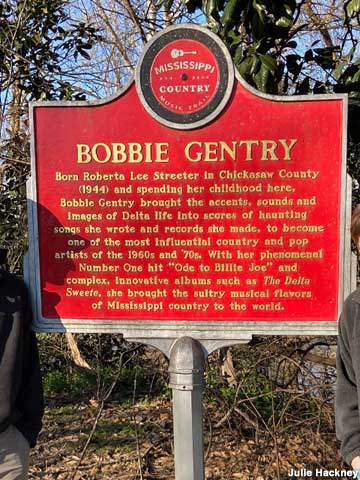
Back to “Ode to Billie Joe”
Part 2
So— Is this song a real (real, not true) story? That is, does it have a real story structure?
There’s a beginning (the situation setup), a middle (the revelation of the death). Is there an ending? Yes, a really bleak one:
A year has come and gone since we heard the news ’bout Billie Joe.
And Brother married Becky Thompson, they bought a store in Tupelo.
There was a virus goin’ ’round, Papa caught it, and he died last spring,
And now mama doesn’t seem to wanna do much of anything.
Another aspect of a story song is that the ending should connect to the beginning. Here we see that busy family with the farm and the black-eyed peas and biscuits from the first verse has disintegrated. As the analyst Sarah Kendzior puts it, “She recites these horrors like a grocery list.” So the narrator has become as detached as the rest of her family.
The events—Brother’s marriage and move, Papa’s death, Mama’s despair—don’t seem to have much to do with the “middle” (Billie Joe’s suicide), but the narrator’s coda makes a thematic if not material connection:
And me, I spend a lot of time pickin’ flowers up on Choctaw Ridge,
And drop them into the muddy water off the Tallahatchie Bridge.
I notice that “And me”—it’s a connector not just to the death of the family, but to the earlier death of Billie Joe. She really is all alone now, and there’s no mystery now of what she’s now throwing off the bridge—flowers, a memorial to all she’s lost.

Thematic Unity
There’s unity here. I notice how much the setting is emphasized—the specific date and a year later, the sleepy dusty Delta region, the ridge and the bridge (the rhyme emphasizes the connection), the store in Tupelo. A deep sense of place is a common theme in southern storytelling, and here that precision lets us sit there at the table with this oblivious family.
There’s also a thematic unity about apathy. There’s the preacher who accepts an invite for dinner and just happens to mention that he’d seen the victim with the daughter earlier– No words of solace, no concern for the girl. There’s the father’s casual dismissal of Billie Joe’s intelligence, and Mama’s perfunctory sympathy.
Their indifference in the beginning becomes death and despair at the end: The father dies, and the mother who had been cooking all morning in the beginning “doesn’t seem to wanna do much of anything.”
Brother at least shows some signs of life—remembering a shared prank with Billie Joe—which makes his relative success in the end more plausible. The narrator, however, who starts out chopping cotton, ends up only dropping flowers over the bridge, a desultory echo of Billie Joe’s suicide.
Death echoes throughout this—Billie Joe and the preacher and whatever got thrown from the bridge, Papa’s death, and the narrator’s memorial flowers.
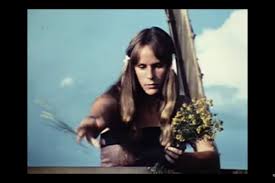
Those Echoes
Bobbie Gentry said that the real mystery was the family’s apathy about the death, and the indifference so many Americans showed towards other deaths. Though she did not specify which deaths, this was the time when thousands of US soldiers and many more Vietnamese civilians were dying in a futile war.
More relevantly, her hometown Money was where the black teen Emmett Till was lynched by white murderers in 1955—and thrown into the Tallahatchee River. Gentry was living in the town when Till was murdered. In the subsequent trial, the murderers were acquitted by an all-white, all-male jury, with some jurors stating the murder was justified, and others claiming that there was no evidence the mutilated body was Till.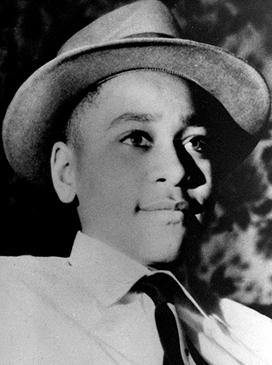
Another southern resonance: Money is only 100 miles from Philadelphia, MS, where three civil rights activists were lynched in 1964—in June. The killers were repeatedly let go by the state prosecutors, until the federal government finally got convictions, though the sentences were minimal (less than 10 years).
The famous bridge, by the way, was destroyed by arson in 1972.
—
While Gentry—a white southern woman in the 1960s—understandably did not explicitly connect Billie Joe’s suicide to these murders, she declared that the song was “a study in unconscious cruelty.”
Sarah Kendzior in a 2023 essay catches the reference to the “virus going round” and connects this to the two million (now nearly forgotten) American covid deaths: “’Ode to Billie Joe’ is known as a sad song. But its sadness lies in the absence of mourning. Death came and people shrugged. If they grieved, they grieved alone.”
—
This song is not just a story. It’s a story that is still relevant and will be as long as we shrug and forget.