
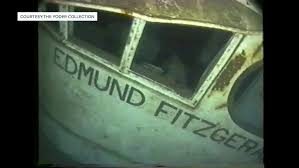
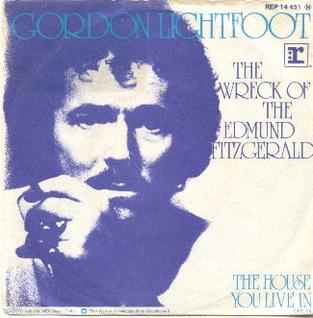
So the first “story song” I’d like to discuss is Gordon Lightfoot’s “The Wreck of the Edmund Fitzgerald.” This 1976 folk ballad is in a long tradition of songs about sea voyages and disasters, going back all the way to the Homeric bards who sang about the wreck of Odysseus’s ship. I guess sailors had a lot of downtime, because sea shanties are an entire genre of music, with rollicking tunes and often gloomy lyrics. Many are in ballad form, which is a common way to tell a story in song.
“Just Tell a Story”
This song tells the true story of the freighter Edmund Fitzgerald, the largest ship on the Great Lakes, which wrecked in a Lake Superior storm in November 1975. Lightfoot grew up on the Canadian side of Lake Huron, and had experimented with other songs about shipwrecks. He started the song almost immediately, recounting the tragedy of the sailors and the ship and the disaster.
As he wrote the song just a month after the wreck, he worried that the ship hadn’t yet been recovered. With no survivors, he couldn’t be sure that his speculations were even close to the truth. “Well, how could anybody know what the old cook said, or even if the old cook came out on deck?” In a 25th anniversary article about the song, Lightfoot said that he consulted his guitar player, Terry Clements. “He said Mark Twain would say, `Tell a story,’”
The result was an elegiac chronicle of a Great Lakes crew facing “the witch of November”.
When I asked friends about their favorite story songs, this one was mentioned frequently. The haunting melody so perfectly echoes the tragic events, and the lines are so immediate and personal:
When suppertime came the old cook came on deck sayin’
“Fellas, it’s too rough to feed ya.”
At seven P.M. a main hatchway caved in, he said
“Fellas, it’s been good to know ya.”
The Heart of the Story
Now is this a story in the limited definition I’ve determined?
There’s a setting (time and place) and situation described in the first verse:
The legend lives on from the Chippewa on down
Of the big lake they called Gitche Gumee.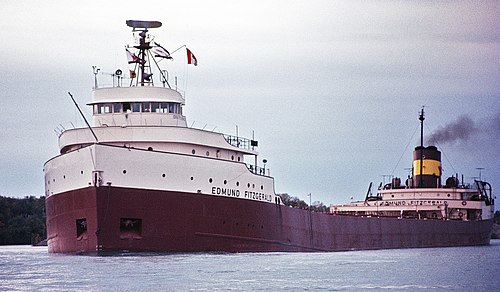
The lake, it is said, never gives up her dead
When the skies of November turn gloomy.
There’s the epic conflict of nature against man, and characters—the 29 crewmen represented by the imperturbable cook and the captain who “wired in he had water comin’ in, and the good ship and crew was in peril.” There are also “the wives and the sons and the daughters” waiting in vain for their lost sailors.
So there’s a beginning (setting and situation), a middle (conflict and rising action), and most importantly an end—the sorrow of the families, the laments of the searchers that another 15 miles could have saved them, the Mariners’ Church where “the church bell chimed till it rang twenty-nine times, for each man on the Edmund Fitzgerald.” (This Detroit church repeats this every year on the anniversary of the wreck.)
And there’s a message of sorts in a plaintive question, “Does anyone know where the love of God goes, when the waves turn the minutes to hours?”
The Sequel
As with so many good stories, there’s a bit of a sequel. In the decades after the wreck, Lightfoot never grew tired of singing his song. He met many of the seamen’s families at concerts. “Many have become friends,” he said. “We always get them backstage and treat them real well and make them feel good.”
And when the songwriter died in 2023, the Mariners Church memorializ ed him by ringing its bell 30 times, 29 for the Edmund Fitzgerald crew, and a final tolling for Lightfoot.
Here are the lyrics to the song.
And here is the incomparable Gordon Lightfoot singing it.
Next I’ll discuss another shipwreck song, also based on a true story, well, several stories, because so many Arctic and Antarctic expeditions came to tragedy: Josh Ritter’s “Another New World.”
1 thought on ““Fellas, it’s been good to know ya.” -The story of “The Wreck of the Edmund Fitzgerald”-”
I heard Gordon Lightfoot in concert in the late 70s. A packed house in the Portland, Oregon Coliseum. Just him and his guitar under a solo spot light. He finished the song to stunned silence. You could have heard a pin drop. Then a gush of applause and more than one person wiped away tears.