

Despite the protests of some legendary authors from back in the day, every writer needs an editor. Here at BookViewCafe, we often edit each others’ work collaboratively, but are also used to having our work gone over by book editors or editors we hire for the purpose of helping to buff up a book before it goes out into the world seeking a home.
There are three basic layers of editing: line editing, copyediting and proofreading.
All of these require basic knowledge that can make the difference between your book being edited in a helpful manner, savaged by someone who doesn’t understand what the job involves, or given two thumbs up by a friend who doesn’t feel comfortable telling you what’s what. This is true whether you ask a friend to edit your book because they love reading books in your genre, or you hire a freelance editor.
I’ll talk about some basic things editors need to know in the next episode, but first, I’d like to take a moment to explain the different types of edits and editors. As with many things, mileage may vary.
Line editing
This is about your story overall. Does it work? Do the plot elements follow and hang together? Does it satisfy? Do the reveals have the desired effect (gasp! aha! wut?).
A line edit looks at issues of craft, including writing style, language usage, sentence structure and coherence. Do your sentences make sense? Do they flow well? How’s the pacing? Are facts alluded to alluded to accurately? Is your use of terminology consistent? Does your timeline work?
In two of the publishing houses I’ve been privileged to work with (Del Rey/Lucas Books and Pegasus Crime), timeline coherence was a separate editing pass. It’s something you should do for yourself as one of your last editing tasks, so that if you are successful in selling your work, your editor has only to confirm that you did your job right.
 When I added a scene to my detective/adventure novel The Antiquities Hunter and handed over the manuscript to my editor at Pegasus, it was her timeline pass that caught an error I’d introduced that put my timeline off by three days. This is why on the last two novels I’ve written, including the one I’m finishing up right now, I’ve done a timeline pass after my continuity pass. This is especially important if you ‘ve done a lot of editing and rewriting as you crafted your novel.
Some editors, like me, approach a line edit by taking off their Editing Hat. They just read like a reader until something “off” waves its scurvy little hand. If it’s minor, they may take a note and move on. If they keep getting waved at, what they do next will be determined by whether they are
1) a submissions editor at an agency or publisher that is considering your book for representation or publication,
2) a freelance editor who is preparing your book to go to said agent or publisher or
3) a traditional publisher’s book editor prepping your novel for publication.
I’m a Type 2 editor. Types 2 and 3 will react to repeated road blocks in your manuscript by putting on the Editing Hat and beginning to take serious notes, asking questions and proposing changes—possibly even making those changes, depending on how much discretion they’ve been given by whomever they’re working for—you or your publisher.
When I got back the editing notes on The Antiquities Hunter I was surprised that my editor would sometimes simply rework a scene with tracking turned on. Her theory was that it took less time for her to do that than explain in written notes how she’d recraft the scene and why. It took me a minute to realize that she was right, her edits could easily be backed out and she wasn’t set on being right. The relationship became delightfully collaborative.
 A word of caution: A Type 1 editor will not put on their Editing Hat when confronted with things that go bump in your manuscript; they will toss your manuscript onto the reject pile … or delete it from their favorite reading device.
The sort of things that cause Type 1 editors to reject a story or book seem ridiculously minor to some writers. I had one editing client tell me that the serious and repeated errors in his manuscript weren’t a problem because he’d pitched the story idea to the editor of a major New York publisher, who’d loved it. My client just knew the editor would see the strength of the story’s ideas shining through any flaws. Counting on the cordial relationship he had with the editor, he was certain that he was about to sell his first book. But, rather than waiting until he had a thoroughly edited work in hand, my client sent a package to the publisher that included an edited portion of the manuscript, a draft portion of the manuscript and a synopsis in which he’d misspelled a major character’s name in several different ways within the space of three paragraphs. The result: An editor who really had been enthusiastic about the concept behind my client’s novel turned it down. Why? I suspect it was because the quality of the work was inconsistent; the editor couldn’t be sure what he was going to get.
A book editor who reads your work does so trusting that you know what you’re doing and have made sure your work is solid before you send it. Failing to do that is a violation of that trust. Personally, I think the biggest mistake my client made was to presume on the relationship he’d already established with the editor. My feeling is that if you know the editor, have worked with them before, or established a rapport with them, you should strive to give them your very best work—work that is as clean and shiny as you can make it.
Copy-editing
This comes after the line edit and is meant to pick up technical or mechanical flaws in your work. These include points of grammar, sentence structure and word usage the line edit didn’t address. It’s also to make sure that if there is a “house” standard your story adheres to it, or if there isn’t, that it adheres to a general industry standard and is internally consistent for things like punctuation, case, tense, spelling, word usage, etc.
Proofreading
 This is the last pass before the manuscript is ready for prime time. It’s there to catch those things that will inevitably be missed (or may have been introduced) in the previous passes. These might include double words (“That dude is the the bomb.”) or unnecessary capitalization (Neville was a vigilant Score Keeper.)
All of these are things a writer should perform on their own manuscript. That doesn’t mean you shouldn’t always get at least one more set of eyes on it. I like to do my last passes reading aloud. And let me tell you that as many times as I’ve gone over a particular story, I will always find something that needs to be fixed … as will the editor who sees it next. The writer’s eye often sees what it expects to see … until just as you click the Send button.
The next question is: What does an editor need to know? In the case of a freelance editor, what do you need to know that they know before you put your beloved and shiny work in their hands? That’s what I’ll explore next.
***
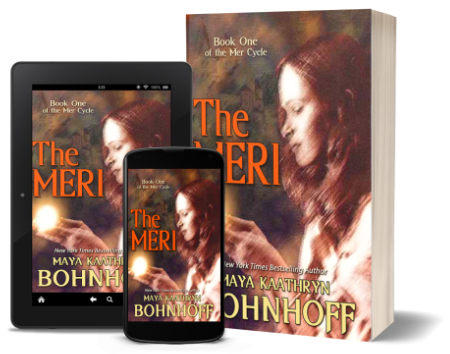
You can find Maya’s books in the BookViewCafe bookstore.