
ROMANCE WRITERS OF AMERICA
Romance Writers of America declared bankruptcy, https://associationsnow.com/2024/06/authors-group-declares-bankruptcy/
If you are not a romance genre writer or reader this seems like a piece of news you can walk away from.
There are other considerations.
When I first started taking my writing seriously, back in the late 1980s, I received an introduction to the local chapter of RWA through a friend of a friend. Paying dues was difficult within my budget. High enough to insure I’d try to make the most of the monthly meetings and regular workshops, but not so much that I walked away shaking my head.
It was the best move I made in my writing career. A) I joined a critique group that taught me how to fine tune my writing. B) through RWA I met my first agent who served me well and is still 30+ years later a friend. C) They taught me how to read a contract and to act professionally in public.
Aside from my personal benefits there were larger issues that benefited all professional and pre-professional writers.
For a long time, publishers in general treated their authors like coal miners, not very smart and infinitely disposable. That worked in the 1950s. But with women’s liberation came professional writers who also worked in professions previously closed to them.
Enter the financial advisor who investigated Mills & Boone—the parent corporation of Harlequin/Silhouette—as a potential investment for a client. They made huge profits. However, not all the numbers added up and the business model they showed authors varied greatly from the one open to investors.
For example, M&B claimed that because they absorbed the shipping cost on their subscription program, they could only afford to offer the authors 2% royalties instead of the 6-8% from retail sales. Not only were subscriptions the largest part of their income, they did not acknowledge that with print books they sold their product at a 40% discount so the retailer could make some money on the deal. Standard publishing pricing. That 40% covered way more than the shipping costs for subscriptions which sold for full retail.
Our friendly financial advisor took her figures to the RWA and publicized them widely. Changes were made. I believe the author royalty jumped to 4% for subscription sales in the compromise deal.
For customers, the subscription deal had the advantage of receiving their books three months in advance of retail release. This meant that readers read all of the December books and resold them to used bookstores by October 1st. Why would readers wait another two months to read their favorite authors and pay full price at retail outlets?
Once again, RWA dove into action. Because they allowed pre-published memberships, their numbers had grown to over 8000. Each of us was asked to purchase 1 book from a used bookstore that was available more than 2 months ahead of the release date. We then mailed that book to the editors with a note of where and when said book was purchased and the message “This is a retail sale you just lost.” Imagine the power of 8000 angry women.
The shipping of subscription books moved to 6 week in advance instead of 12.
And then there was the one case with more far-reaching effect across genres.
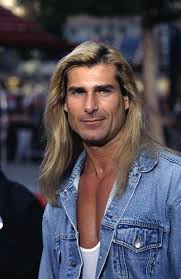
Back when historical romances began tipping over into mainstream, a marketer from M&B hit upon a wonderful idea. Fabio, the hottest and most expensive cover model for historical romances (he got paid a LOT more than the authors of those books) was given a contract for him to “write” three big fat historical romances, with all the media hype attached.
This man could barely speak English. How could we expect him to write in our language?
He didn’t. M&B hired a mid-list writer with a name few remembered. She was paid handsomely, though not as much as Fabio. But her contract had a gag clause that would choke a horse. She couldn’t tell anyone whose name would be on the cover of the book. The threat of legal action with penalties were severe enough she adhered to the contract.
As part of her writing process, she shared pieces of her work with a critique group of close friends. She did not reveal the title or the fact that she was ghost writing—and they all testified to that in court. But romance writers are not stupid. They put together the pieces of her work and some of the plot snippets Fabio had revealed in interviews and came up with the answer. The critique group went public through RWA.
Their lawyers—many of them writers as well—fought the publisher’s lawyers all the way to the Supreme Court.
Publishers can no longer invoke those gag clauses without the consent of the author. I know an author who didn’t want his name associated with the work he ghosted and signed multi page waivers. Whoever actually writes the book now has to have their name on the cover and the copyright page, either as full author, or as co-author. Another author of my acquaintance went from a line in the acknowledgements for his fine work in preparing the manuscript to co-author of a series produced by a mega best seller.
None of these advances in author rights would have happened without RWA.