
My husband Jeff and I have spent the last few years travelling throughout Indiana, with plans to write a bestseller (just kidding) book describing the many small towns we’ve found. From James Dean’s birthplace (his image is EVERYWHERE in Fairmount) to the idyllic utopian New Harmony, we’ve seen many intriguing places in what is generally considered the most boring of states.
One fascinating aspect of Indiana is its role as a “branch” of the Underground Railroad, due to its position just across the Ohio River from slave states. Indiana also had a number of abolitionist Quakers and Methodists, who served as “conductors” on the railroad, guiding freedom seekers in stages from the river to Michigan and true freedom in Canada.
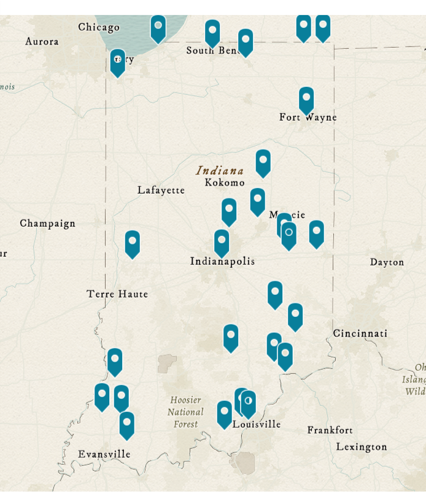
There were also several African-American settlements scattered throughout the state, which could shelter freedom seekers and even provide them a new home and work. Last week, while we were researching a presentation on the Underground Railroad, we found a lovely example of these 19th Century sanctuaries, about 20 miles north of our home in Indianapolis.
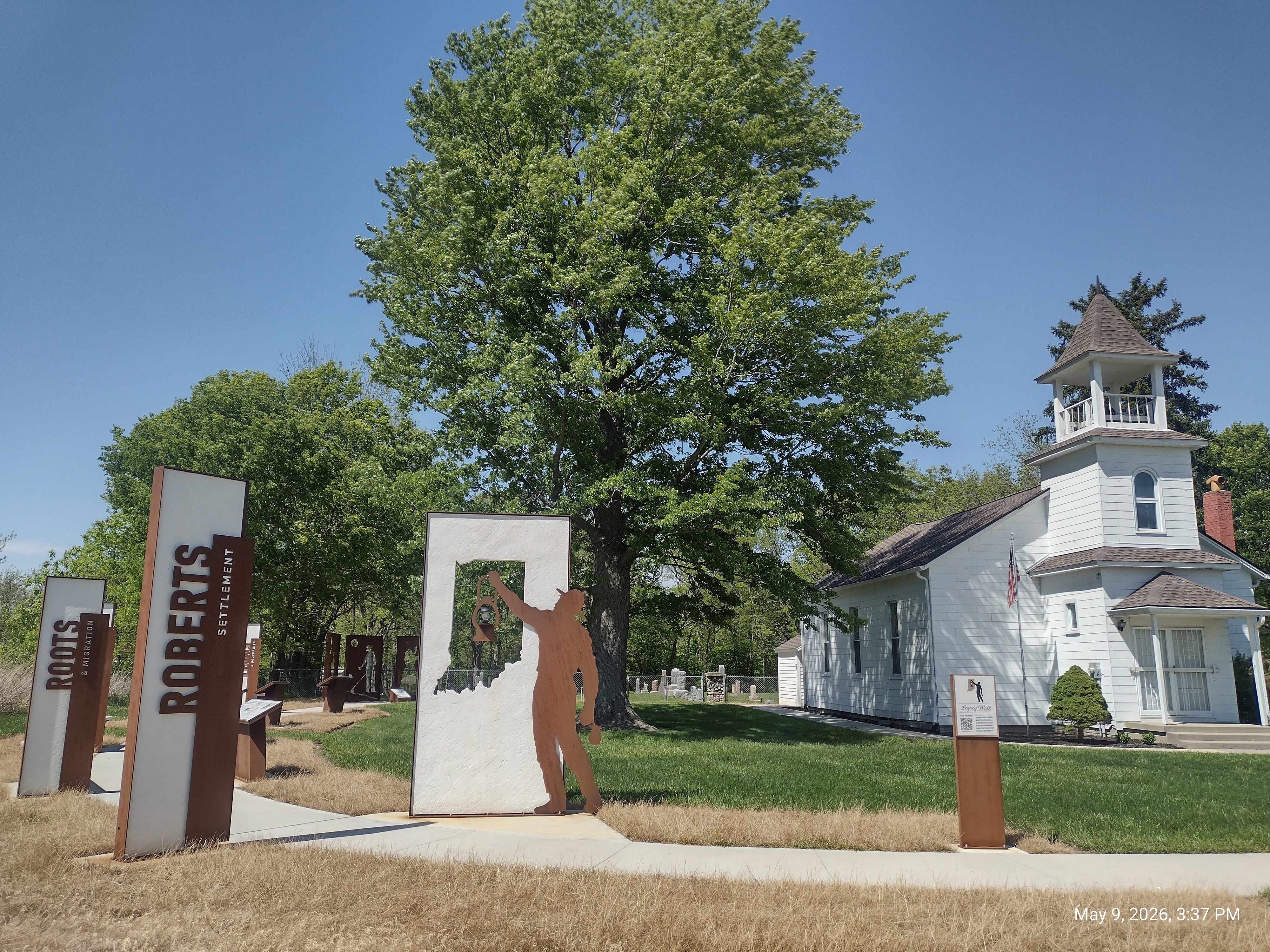
Roberts Chapel is an early integrated settlement with a beautifully restored chapel, a carefully tended graveyard, and a legacy path with exhibits about the history of the village. The Roberts settlement started in North Carolina before 1800 with a melting pot group of early Americans– free African Americans, English indentured servants, and Native Americans who had resisted relocation. They built a village there with farms and houses. But they lived in fear that their relatives and children might get captured and enslaved.
So they moved to central Indiana close to abolitionist Methodist and Quaker congregations. They named the village Roberts Settlement after the surname most common in their group. They bought land, built an African Methodist Episcopalian chapel, and raised families. Their farming became more successful when the railroad came through a mile away. The population peeked at 400 after the war, mostly descendants of the original migrants. 18 men served in the Union Army during the Civil War, and two veterans are buried in the attached graveyard.
The community stressed peace, faith, hard work, and education. Ironically, that was the start of its downfall. Many young people were able to get professional and trade work in the cities, and moved on in the 20th Century. For example, Carl Roberts, the grandson of founders, went to Chicago for medical school and became a prominent surgeon and president of the National Medical Association.
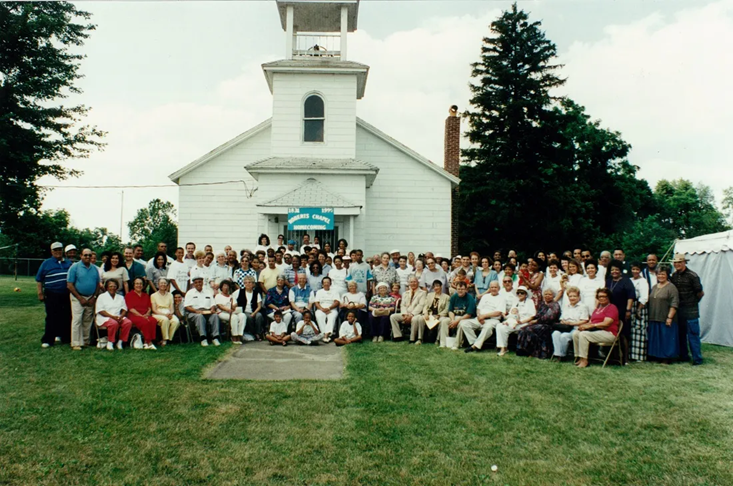
Though the settlement lost population, the descendants of the founders never deserted it entirely. Since 1924, they have met there by the old chapel each year for a family reunion. The photos show a real tapestry of Americans of many shades! The last few years, they’ve been able to walk along the “Legacy Walk”, with its exhibits chronicling the settlement’s proud history.
Here’s a great civil-rights era (1968) song that connects that 20th Century freedom movement with the one in the 19th Century: Freedom Train by James Carr.