
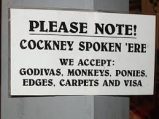
Those Cocky Cockneys and Their Rhymes
As a fan of British mysteries, I’ve several times come across the term “brown bread.” Twice this was used by the working-class sergeants in Midsomer Murders, and also by Peter Grant, the Cockney magician/constable in Ben Aaronovitch’s great Rivers of London series. (Yes, he’s a constable with magical powers who investigates magical crimes.) In each instance, they were referring to a corpse in traditional Cockney rhyming slang: “He’s brown bread” = “He’s dead.” I am intrigued by these contemporary uses, because slang changes so rapidly, a slang term is usually obsolete by the time it’s used by us muggles. But here’s a term that’s 200 years old and still in use.
Coincidentally, I’m working on a mystery novel set in 1826 London, and my lady sleuths have a problem. They are hot on the trail of the next clue, but, being lady sleuths, they can’t plausibly go into Seven Dials and the Rookery and other disreputable areas to find information. So they hire a Bow Street Runner to do the necessary footwork.
The Bow Street Runners were a branch of the constabulary, and acted more or less as detectives. They could also hire themselves out was private investigators. They were usually working-class men who could mingle with the criminal classes to gather information and infiltrate gangs. Many were “Cockneys”, born “within earshot of the bells of St Mary-le-Bow church in the City”—that is, East Central London.
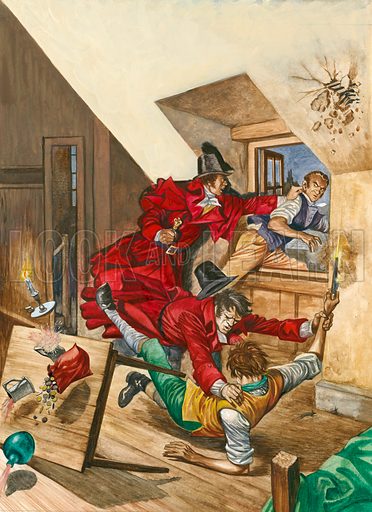 Now I’m building Sam Walker, the Bow Street Runner who is bemused to find himself in the employ of these two fashionable society ladies. I want to have fun with their mutual incomprehension. Theoretically they’re all speaking English, but Sam’s speech is going to be colloquial, quick, and clever. He’s going to use the argot of the urban proletariat of the time—and still in use 200 years later: Cockney Rhyming Slang.
This system of rhyming slang has been widely studied by linguists for its historical and cultural significance. Here’s a video that explores some of the aspect of this characteristically clever system of wordplay, which uses phrases with the last word a rhyme for the term they are “masking”—often a term that is criminal, obscene, or negative. This slang system serves as a “cryptolect” — a semi-secret dialect that uses coded language to conceal meaning from those outside the group.
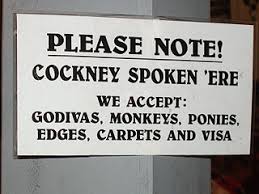
Often the actual rhyming word is dropped and only the first word is used, which would just add to the confusion of those of us outside the in-crowd! “Bread and honey” (money) becomes just bread—He’s got plenty of bread. “Boat race” (face) becomes just boat– I popped him one in the boat.
I found some other rhyming slang terms my Bow Street Runner could have used in the 1820s:
Bread and honey — money
Lady from Bristol — pistol
China plate — mate
Drum and fife — wife
Duke of Kent — rent
Elephant’s trunk — drunk
Apples and pears- stairs
Hampstead Heath — teeth
Pork pie – a lie
I’m envisioning a scene where the ladies express fear that Sam might be assaulted during his undercover work, and he replies, “No fear, missy, I’ve got my lady from Bristol with me!” Then of course he would have to translate, “I mean, my pistol.”
This phenomenon is a reminder that often the most inventive and clever wordplay comes from the lower socioeconomic sector. Whether it’s Shakespeare’s Dogberry or the Beatles or Frenchy in Grease or the rapper Master P, the proles have the wit and wisdom and the defiance of authority to invent their own lingo.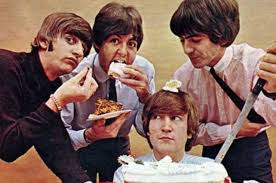
Now if I really want to get clever, I might have my society lady sleuths try to emulate his wordplay, and even invent some of their own to baffle their China plates (mates) and bitter ends (friends).
1 thought on “Those Cocky Cockneys and Their Rhymes”
I just heard another cockney rhyme term! This one took a minute to puzzle out because like other cockney slang terms, it was truncated. (Again, this was from a British mystery show.)
“Went home, drank a couple six-packs, and I was properly Schindlered.”
Huh? Schindlered?
The six-packs were the clue.
Schindler’s List (the Spielberg film).
List= pissed.
“Pissed” is ordinary British slang, of course, for “drunk.”
So “properly Schindlered” means “really drunk.”
They’re so clever to use the non-rhyming word as the signifier, so that we have to puzzle it out! That keeps it a bit exclusive to the cognoscenti!