

“Hamnet,” Chloé Zhao’s 2025 film, dramatizes the emotional conflict that led to Shakespeare writing Hamlet. It’s fictionalized, of course—we know very little about the historical Will Shakespeare. But for centuries it’s been suggested by some scholars that “Hamlet” was so titled as some kind of tribute to his son Hamnet (these are variants of the same name), who had died in childhood a couple years before the play’s writing.

This film got a rave review from the NY Times, describing it as “ardent and searing and brimming with emotion.” But this was hardly a universal reaction. Several reviewers acknowledged the power of the film, but described the emotional impact as a result of “manipulation and exploitation” of the ultimate tragedy of a child’s death.
I was firmly there with the Times reviewer. The film’s emotional power is extraordinary. In my theater, there was truly not a dry eye. Viewers were sobbing at the ending. (I don’t want to spoil that ending, but it takes place at a performance at the Globe Theatre.)
Partly due to that group response, I don’t discount the negative reviews. The film IS manipulative. It DOES exploit our empathy. It does make use of a child’s death to engender grief in the audience.
Exploitation and Empathy
But both reactions can be true at the same time. A story can be both profoundly authentic and simultaneously exploitative and manipulative. That’s because the very purpose of dramatic structure is to manipulate the audience towards a certain experience—in this case, the vicarious experience of grief.
The filmmakers used dramatic structure effectively to guide the audience to that outpouring of grief. But the structure also leads to the subsequent release of emotion, and a final message about the power of drama and creativity to explore the human condition.
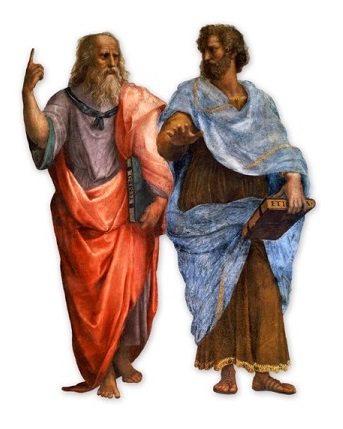
I discussed the responses to the film with other viewers—those who found it profound, and those who found it exploitative. This reminded me of an ancient debate between a professor and his student about the dramatic quality of “catharsis”. The professor was Plato, and the student was Aristotle. They drew upon their life during an era of drama as great (or greater) than that of the Shakespearean time. Of course they were both familiar with the Homeric epics, The Iliad and The Odyssey, and their reactions engendered their disagreement about the experience and the ethics of drama.
Next week, I’ll discuss this great debate and how it can help us as audiences and creators to understand the power and the danger of story.
3 thoughts on ““Hamnet”: Manipulation… or Just Great Dramatic Structure? Could It Be Both?”
I found the film curiously “heady” until the last ten minutes or so, when it entirely grabbed me and left me weeping. It’s a beautiful film, and beautifully made (although I did wonder how any woman married to Will Shakespeare could be so entirely unaware of what he did in his day job…which did not endear her to me). I did not feel that the film was manipulative (or rather that it was only manipulative), any more than any other piece of art is manipulative: the author wants to tell you a story and move you in a particular way. If they’re good at it, the audience is manipulated.
What I object to, when I’m seeing a film or reading a book, is being left with the sense that the creator is only interested in the results of the manipulation. It’s one of the reasons I don’t like horror movies: so often they are feel calculated to make me jump, not to make me feel, and I get no sense that the filmmaker is making him/herself jump along with me (“Okay,” I imagine the director muttering. “This’ll make ’em jump an inch out of their seat. The next one’ll be 2 inches…”). I loathe Forrest Gump because it feels totally manipulative, even when I’m crying (I’m a famously easy cry). It’s like paying to have someone twist my arm, and the more I resist, the harder they twist. In the worst cases, I feel like the artist is not only pulling my strings, but doesn’t bother to hide the strings because they’re relying on me to be swept away by my feels.
I feel this way about certain movie composers: I don’t need John Williams to tell me how to feel. I need his music to support the emotional journey, not act as a shortcut.
When am I okay with being manipulated? I’ve already said that art is inherently manipulative, so I’m clearly okay with it sometimes. When I feel like the director or writer or artist is sitting right there with me, knowing it will elicit feelings because the work elicited those feelings with them. When I wept at the end of Hamnet I felt that the director, Chloë Zhao, had those same feelings and wanted to share them with me.
I like that analogy to John Williams– he does tell you how you should feel– almost forces us to feel a particular way. And it is a shortcut. Hmm. I’m going to be writing Part 3 of this blog series applying this to the events in Hamnet, especially the ending, so thanks for the insights!
I also loathed Forrest Gump, mostly because of the jokey tone sort of dirtying up the tragic events. Dark comedy provides another perspective on tragedy, but this seemed less like comedy than poorly done “snark.” And the piling up of the tragedies just made each of them seem a bit trivial.
But I’ll be thinking about this as I move to the next post– yes, the director had those feelings and we shared them, as well as that sense that something can be born out of tragedy, and that sharing emotion makes it more profound. The ending where everyone joined her was sort of perfect in conveying that– these Londoners who had also all lost loved ones– they understood and joined her.
I’m going to quote you in the third blog post examining Hamnet directly, if that’s okay!