
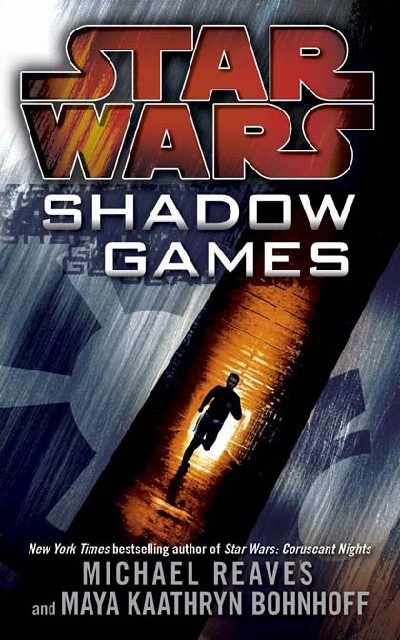
 Collaborative relationships in writing come in a variety of shapes and sizes. You might have a writing partner that you work collaboratively with, as I did for a number of years with the late, amazing Michael Reaves. Or you might work with a freelance editor like me to help improve a story or your craft in general. If you are fortunate, skilled and persistent enough to be published, you’ll find yourself working with an editor from a publishing house.
Then, there are writers’ critique groups. I mention this type of collaboration first because it’s often the first collaborative relationship a writer has in which they share their work with others.
A healthy and helpful critique group—that is, one whose goal is to help all participants improve their work—is worth its weight in Lindor truffles. A toxic critique group—one in which some members see the others as competitors in a zero sum game—can chase joy, confidence and energy right out of the room.
How do you distinguish one from the other? Alas, you might not know which you’ve gotten yourself into until you sit in and see how it operates. In the spirit of the Golden Rule—“Do as you would be done by,” as Gautama Buddha put it—I think it’s always helpful to model the consideration you’d like to receive.
Here are a few suggestions:
- When you give advice to other writers in your group, give it once, maybe reinforce it once more (or write it down), then move on.
- Don’t bully another writer to take your advice and don’t let someone else bully you. Smile and nod, then do what you think needs to be done.
- Don’t make changes that don’t feel right, especially if they come from one source. A good rule of thumb is that the seriousness with which you take critique is proportional to how many readers of your work say the same thing.
- Even if they pile on, don’t give in to your critique group just to keep peace in the valley.
- Always keep a pre-critique group control draft of your manuscript. Always.
To drive home how important this last item is, I share the tale of “Andy”. Andy was a new member of a writers group that I was asked to mentor. He had written a fairly ambitious speculative fiction novel that was actually a very good first effort and, I felt, publishable with a bit of tightening and some clarification of the timeline. I told him as much at the beginning of a group meeting. What happened next was painful to Andy and disturbing to me.
During the meeting, several other members spoke about problems they had with the manuscript. No two identified the same problem. They eagerly piled on, and each handed further notes to Andy, who looked a bit bewildered by the barrage. Andy sent me the next draft of his novel and it was muddled beyond recognition. He’d tried to implement every single critique he’d gotten, resulting in a broken timeline, murky action and bewildering dialogue. I wasn’t even sure what genre he intended it to be—fantasy writers in the group had leaned one way and SF writers another. A story that had been a few edits short of “ship it” no longer made any sense.
I explained as gently as I could that trying to make that many changes to everything everywhere all at once was never a good idea. I suggested Andy revert back to his first draft and pick through the critiques (with me, if he liked) to decide what needed to be addressed.
Andy didn’t have a saved first draft. He had rewritten the book entirely in the original file. I almost cried.
“It’s okay,” he told me. “My wife doesn’t like me dabbling in this science fiction writing thing anyway. She says it’s a waste of time.” He left the group and stopped writing.
 I had some questions to ask the critique group about how they perceived their purpose. If they’d meant to nourish each other, they’d taken a seriously wrong turn. So, here’s another thing to keep in mind if you’re part of a such a group: Critique does NOT mean never having to say you’re sorry.
My beloved writing partner and Jedi Master, Michael, referred to what happened in Andy’s critique group as “peeing on the manuscript.” First readers do it, critique groups do it, editors do it—sometimes. It’s a way for those entities to feel they’ve left their personal mark on the writer’s work. I’ve been fortunate to have had only one or two editors who did that or who tried to impose their sensibilities on my work. Even as a ghostwriter, editor and book doctor, I try to keep as much of my client’s sensibilities and “voice” as I can.
Let me be clear that a good relationship between a writer and critique group should be collaborative, but not coercive and never motivated by the need to feel you’ve contributed something noticeable to the finished work.
The hallmarks of a good critique group are that:
- Participants communicate clearly what issues they see in each others’ work. This should not be a condemnation of genre, subject matter, writing style or a personal commentary based on those things. I once had a member of a writer’s group go on a passionate morality rant because my protagonist said another character was “seriously pissed off ”. He turned a three word piece of dialogue into an ad hominem attack that left his critique group stunned and, well, seriously pissed off.
- Participants withhold their opinions about elements of a story they admit aren’t their cup of tea. Ideally they’d simply pass on a genre they don’t read or like. If they don’t … well, you know where the salt is. While I will gladly hear my husband’s opinion about characterization and clarity of thought in a detective or magical realism story, I know he’s not the goto guy to tell me whether I hit the tropes too hard or didn’t leave enough bread crumbs lying around.
- Participants refrain from pelting each other with everything they thought was “wrong”. Nor do they accord a misused or misspelled word or two the same gravity as deep plot flaws. If I see a lot of problems in a manuscript, I tend to identify the most crucial issues and choose no more than four to give feedback on. In my experience, that allows the writer to work on important elements of craft while not getting overwhelmed with how much there is to do. I’ve also found that often if a writer addresses a major plot hole, for example, their changes may cascade positively into other areas.
- Participants won’t say something is “fine” when it isn’t. Not helpful.
- Participants have something positive to say about the work beyond “but other than that, I liked it”. Something I recommend when giving a critique is to start and end with what you liked or felt was strong. Most efforts have some strengths, and spotlighting them may give the writer a sense of what direction to move during the editing process.
Ultimately, your critique group should make you feel good about being there, even if the reviews are not always positive or your comments are not always accepted or acted on. You may come away from an individual critique gnashing your teeth, but in my experience I gnash my teeth hardest when the reviewer tells me something I already suspected. For example, my first reader (aka, husband), read my first published novel—THE MERI—in draft form and told me it needed more conflict toward the end of the book.
I was mad. He was right. And after I added 10,000 words of escalating tension and conflict, it took my agent less than three months to sell the novel. It garnered a Crawford Fantasy Award nomination, among other things.
Moral of the story is that both first readers and critique groups can be immensely helpful if you can trust them to give honest opinions about the elements of your story they understand, and they can trust you to do the same for them.
In writer’s groups as in life, a little Golden Rule goes a long way.
oOo